Ai


James Mayhew
,
Commercial Director
Mehmud Ali
,
Head of Design

In my previous article, I introduced the AI DXPlaybook as a framework for moving digital teams from ambition to action. As a way of closing the gap between what leaders believe is possible and what is being deployed.
The foundation of the framework is the business and digital context, to determine what needs to be delivered digitally and why. With that established and prioritised, we can move into Design. To understand what is changing in the research-to-design landscape I spoke with Mehmud Ali, Head of Design at Codehouse. How had such an experienced practitioner seen the role develop, and what were his views on the impact of AI?
What he described was a profession at a crossroads, with paths leading in multiple directions. The question — for every designer, and for every leader who employs them — is which direction to walk.
We’re back in the Wild West
Mehmud began his career at a time before the industry had made up its mind about what digital design actually was. " There was no real definition of role. It was a Wild West. You'd come in as a web designer," he told me, "and while that could mean design, it could also be some requirements gathering, or a bit of front-end development."
Then specialisms emerged. UX researchers. UI designers. Motion designers. Front-end engineers. Clear lines were drawn, disciplines were separated, and roles became explicit.
And now, according to Mehmud, we're returning to something that looks remarkably like where we started — but with a crucial difference. Last time, the boundaries were blurry because the industry hadn't figured itself out. This time, they're dissolving because AI has made crossing the boundaries easier than ever before.
"Product Owners can whip up prototypes, Designers can deliver development,” he said. “The Wild West is back!”
A Research Revolution
There's been a lot of noise about AI replacing human user research. Mehmud's view is more nuanced, and more useful.
"User research is always important," he said. "You should always be basing decisions on what the user is experiencing." The issue wasn't the value of research — it was the economics. Research was slow and expensive. The old rule of thumb — that interviewing more than five people gave you diminishing returns was, as he put it, "naturally driven by the cost of interviewing more than five people."
AI, and specifically tools like Motives which we use at Codehouse, hasn't changed the fundamental importance of research. What it's changed is the relationship between research and iteration. "Everything surrounding it can happen so fast now," Mehmud told me. "We have an idea. We spin up a very quick prototype. We test it. We get high-quality insights quickly."
The real shift is in the volume and the persistence of the data. More participants. More candid responses — because people tend to be less guarded when they're not under the glare of a human moderator. And crucially, research that doesn't expire. "You can come back weeks or months later and ask new questions of it," he said. "You've designed a new solution, something new has occurred — you can query back into those tests and get a report almost immediately."
Research is becoming a living input rather than a one-time deliverable. That's a significant operational change that most organisations haven't yet built their workflows around.
He was measured, though, about where AI still falls short. When an AI acts as moderator, it follows the script. It can lack the human ability to recognise when a participant has already answered a question, to read the room, empathise and pivot more naturally. "That nuance of human interaction," he said, "is sometimes where the AI isn't quite there. Not yet at least."
The pattern versus insight concern — the worry that AI tells you what people said rather than what they meant — he acknowledged but didn't accept as a fixed limitation. "You can always go in and identify very specific things that haven't been surfaced. That's where you get your hands dirty a little."
In other words: While AI gives you the data. The insight still needs a human to complete it.
80% Is Not a Finished Design
He described a recent project where he fed a Figma design system into Claude Code and prompted it to generate complete end-to-end journeys based on business requirements. The output was extensive. It was fast. And it was not finished.
"That's what I would tell a digital leader to look for," he said. "Not speed. Quality of output."
That it was: "a phenomenal starter for 10," captures precisely how he thinks about AI's role in the design process currently. "The outputs are not perfect," he said. "But you bring that back into Figma, you refine it, you potentially build it back into the design system." The iteration loop from design system to AI-generated interface to human-refined output — is something that simply wasn't possible at that speed eighteen months ago.
But here's the risk. When something looks polished, the instinct is to call it done. And AI outputs, Mehmud was careful to note, can look very good while missing what actually matters.
"AI won't understand users. It won't know the nuance of business practices. It won't know what you're hoping to achieve." The over-reliance trap is a real one. An interface can pass a visual inspection and fail a UX one. "That's what I would tell a digital leader to look for," he said. "Not speed. Quality of output."
The discriminating question isn't is the team using AI? It's is the team applying design thinking on top of it?
The Design Engineer Has Entered the Building
One of the most concrete structural changes Mehmud described is the transformation of the design-to-development handoff. For most of the industry's history, the deal was simple: designers designed, developers built. The handoff — a Figma file, a specification document — was the transaction between two distinct worlds. Where creativity met code.
That is ending.
"Designers are able to create coded mock-ups very rapidly now," he told me. "Developers can reuse so much of it, or at the very least have a meaningful head start on tackling the coding logic of a solution. We're getting to a point where we're starting to have design engineers — people crossing that boundary." Where once a designer handed a developer a finished design, they're now handing a developer something that could be closer to 60% or 70% built.
This shifts the value of design systems dramatically. A design system with coded components doesn't just ensure visual consistency — it gives the AI something well-structured to work from, and the output it generates is more likely to follow coding standards as a result. Mehmud was direct: "It just further increases the importance of design systems that contain coded components and token system."
The broader implication is that investment in design system infrastructure is no longer just a design team efficiency play. It's a delivery acceleration play.
A Career Compass
This brings me to something that runs beneath everything Mehmud described — a dynamic that could be applied to virtually any role, and how it may progress in the coming years.
For established designers, it's both a pressure and an opportunity.
Most roles sit somewhere in a workflow; things happen ‘upstream’ before entering your world, and then once you have done your bit they are passed ‘downstream’, to the next part of the process. AI means that more of your role may start to happen upstream, delaying or changing your involvement, or you may take on more of what would previous happen downstream. These are the changing boundaries.
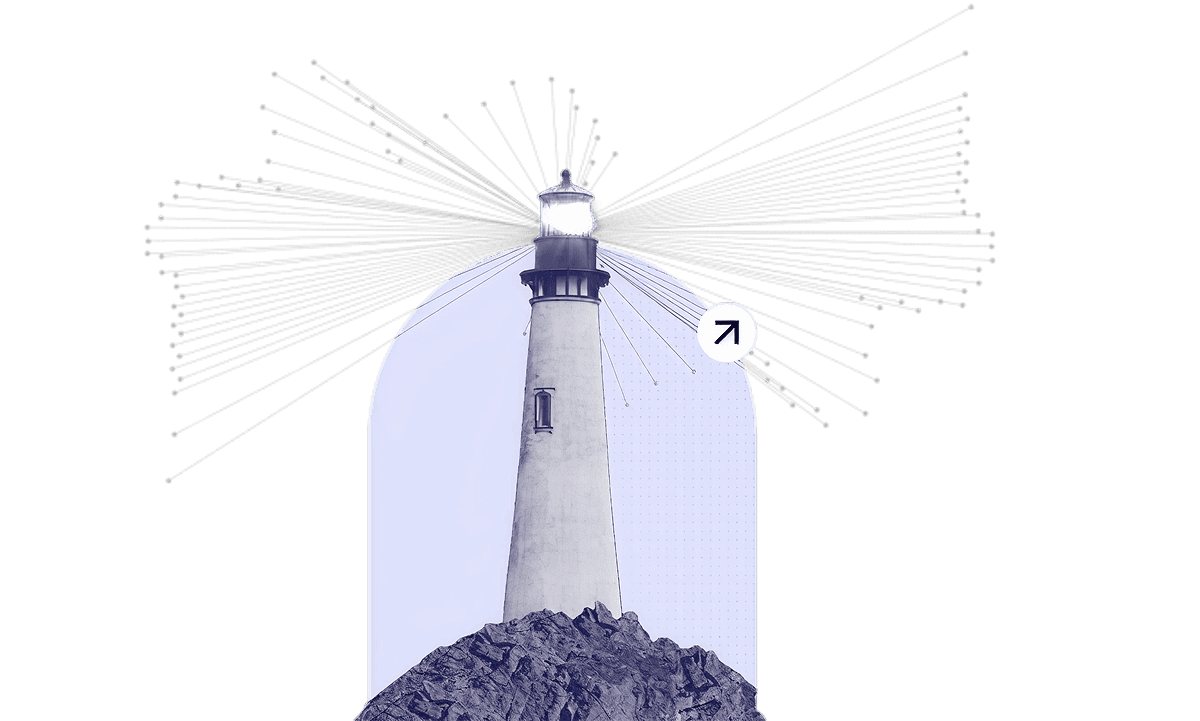
However, as well as this ‘east’ and ‘west’, to the ‘north’ lies greater mastery and improvement — going deeper into your core discipline. To the ‘south’ displacement – where current skills become commoditised or where you fail to improve your expertise.
For a Designer, West, back towards the business is the territory of product ownership, strategic interpretation, and the translation of business requirements into design decisions. Designers who can operate in this territory — who can prompt intelligently because they understand the business problem deeply — are moving upstream. It’s just as possible for the Designer to eat some of the Product Owner's lunch, as it is the other way around.
East, towards delivery is the new territory of the design engineer. [MA1] The person who can take a design system, prompt it into existence in code, and hand something buildable rather than something annotated. Mehmud himself walked me through exactly this kind of workflow.
North, for a Designer, is to become more expert in the craft of design thinking, in human psychology, and experience strategy. AI will also add to the potential of what becoming more ‘expert’ means.
The designers who will struggle are the ones who define themselves purely by the pixel — by the craft of moving elements on a screen. "That's the old world of describing designers," Mehmud said plainly. "That is not what a designer does." This is heading South.
AI has opened these directions simultaneously. Which direction or which combination depends on the individual, the team, and the kind of work they're doing.
"The barrier to entry has dropped so much," Mehmud noted. For new entrants, this is a gift. For established designers, it's both a pressure and an opportunity. The question is the same in either case: where does your compass point?
Fighting The Hegemony of Homogeny
There's a legitimate concern that AI is making design look the same. Last year, Mehmud acknowledged, it was a real problem. Tools defaulted to the same open-source React libraries — and the output looked like it. "You'd end up looking at very similar-looking sites."
But he's watching that change. The ability to build what he called "skills" — specific guardrails and aesthetic requirements fed directly into the model — allows designers to encode their own taste. "You can start building a personality of design into these AI tools. Your aesthetic taste becomes a skill that's inputted into your model and reflected in its output."
The designers who understand this — who invest in defining and codifying their aesthetic sensibility as a model input — will produce distinctive work. The ones who treat AI as a creative shortcut, who take the first output and call it done, will produce work that looks like everyone else's.
This is, in the end, the same tension that has always existed between a competent designer and a great one.
What This Means for Digital Leaders
If you're a digital leader, here are the questions Mehmud's perspective puts on the table:
Is your design team applying AI to accelerate iteration or just to accelerate production? The first creates compounding value. The second produces faster output that may still miss the mark.
Is your design infrastructure — your design system — fit for the AI era? A design system without coded components is both a bottleneck and a barrier to quality.
Are you investing in the upstream capability of your design team? The designers who can articulate business problems clearly, who understand user psychology deeply, who can prompt an AI model with genuine strategic intent, are the people who will deliver for the business.
And critically: are you expecting AI to replace design thinking, or to free up more time for it?
"Don't discount expertise. You still need to apply the expertise of design thinking. And as AI claims more of the low-hanging fruit, that top 20 to 30% doesn't get easier, it gets more important."
The Monster is powerful and is getting more so. But it still needs training. And in design as in everything else – those who understand the difference between what AI can produce and what users truly need will be the ones that matter.